Thursday, 5 May 2011

Schools kill creativity? (The Element)

     The Last book reviewed on this site was The Element by Ken Robinson. While the book is at times overly repetitive it offers readers unique inspiration. It does this through numerous stories of individuals who have successfully harnessed that which makes them passionate. Robinson refers to this practice (of finding and harnessing one's passions) as "The Element".

     Yet aside from encouraging readers to discover that which drives them, the book criticizes formal education. Robinson argues that public education often hinders creativity through students' gradual conformity to rigid expectations. To elucidate this point, in particular regard to children, he includes a poem from Loris Malaguzzi (the founder of Reggio schools). The poem, which follows, is taken from the last chapter of the book entitled: "Making The Grade":

The child
is made of one hundred.
The child has
a hundred languages
a hundred hands 
a hundred thoughts
a hundred ways of thinking
of playing, of speaking.
a hundred always a hundred,
ways of listening
of marveling of loving
a hundred joys
for singing and understanding
a hundred worlds
to discover 
a hundred worlds 
to invent
a hundred worlds 
to dream.
The child has 
a hundred languages 
(and a hundred hundred more)
but they steal ninety-nine.
The school and the culture
separate the head from the body.
They tell the child:
to think without hands 
to do without head
to listen and not to speak
to understand without joy
to love and to marvel
only at Easter and Christmas.
They tell the child:
to discover the world already there
and of the hundred 
they steal ninety-nine.
They tell the child: 
that work and play 
reality and fantasy
science and imagination
sky and earth
reason and dream
are things
that do not belong together

And thus they tell the child
that the hundred is not there.
The child says:
No way. The hundred is there.

     So I want to know what you think, has school made you less or more creative? 
Leave your comments in the section below


Wednesday, 4 May 2011

Reading Rainbow

     For all of you who grew up to the tales told by LeVar Burton on Reading Rainbow, here is a little something; a little nineties nostalgia. :)

Thursday, 28 April 2011

Leviathan

I sat on some grass at the edge of a pond.
It was midnight.
Nostradamus was beside me smoking cigars with Fidel Castro.
In the wisps of tobacco were whispers of vague and unfulfilled prophecies
pronounced by blood, steal, and crumbling icons.
(They both looked pretty bad-ass in their black-leather jackets.)

Across the pond Foucault was busy dissecting things with a pen, the ghost of Kant, and a pair of spectacles.
But Buddha, who was seemingly unfazed by any external stimuli, including Krishna's purple dye, didn't seem to notice;
he was too busy staring intently at the fragrant lotus flowers blossoming at the edge of the pond.
Across from me there was someone wringing out a homespun cloth,
I squinted to see a bald and principled  man, Ghandiji, making salt, undisturbed by rippling water.
Splashing within the pond was Mother Teresa who was creating waves and blowing bubbles, her nun's habit was soaked but she looked childlike, happy, free, and surprisingly progressive.
Christopher Hitchens, saw her differently and was writing a book about it.

To no one's surprise a full moon appeared from behind some clouds -everything was illumined.
I borrowed Foucault's spectacles and was able to see that the grassy knolls,
stretching forever in every direction, were filled with people -
large crowds of pilgrims journeying to this humble pond: walking, running, and dancing across the fields.
I realized I was one of them, and my curiosity drove me to the waters edge.

In the center of the pond, undisturbed by Teresa's gaiety, were twelve stars
but conduits not sources of light.
A creature swam under these stars and reverent rumors of Leviathan rolled across the knolls.
It spiraled up and up and up from the depths of the pond.
It grew in size, Teresa laughed, Gandhi smiled, Fidel's jaw dropped, and the pilgrims clapped at the spectacle.
Teresa's waves were soon dwarfed by the tsunamis of Leviathan.
I approached the wisest and largest of creatures, now fully surfaced.
Her smile started an earthquake of laughter amongst those gathered, which was more the result of an effervescing joy than a knee-jerk reaction to a punch-line.
Her eyes were kind, bidding any to come to her, to embrace her, to love and be loved.
She was god-like but not a god yet the finest of creatures.

Perhaps because I was drunk from the rhythm of the place or maybe because the beauty of her eyes pillaged my judgment, I ran to her, and with remarkable stupidity jumped on her back, swinging my arms around her neck.
And with this, in an instance of playful levity she dove back into the pond.
I was submerged, my arms still tight around her neck, my world was suddenly changing.
It was out of my control and I didn't know where I was going.

With happy stoicism Buddha waved goodbye.

Book Consumption: What Were the Last Three Books that You Read?

What Were the Last Three Books that You Read?

Wednesday, 27 April 2011

Everything is Music

I woke up this morning and plugged my ears into their headphones:
It was bliss man,
just listening to music before class:
"Hello, I'm Johnny Cash";
I noticed I was different, I wanted to run...so I did -I like running-
I jumped up on a cement wall and ran like heaven
and all these words just started hitting me,
stuff that I'm sure, no one had ever thought of
and would probably make me a millionaire or something
-it was amazing-
malfortunately, I forgot what the words were, but they were amazing!
(you'll have to trust me),
one thing I do remember thinking was that music,
music is everything and everything is music
and sure there is dissonance; disharmony, but it's all a song:
trees, atoms, stars, sex, Led Zeppelin, neural synapses, breath, sidewalk chalk, day dreams
and this unending sentence I am now writing
and creativity -even grammarians-
are all part of a larger narrative, a meta-narrative:
conduits of a single river; notes in the song of existence:
thinking this way made me dance,
which I think is pretty natural when the whole world is singing:

Saturday, 2 April 2011

The Element by Ken Robinson


In this episode I talk about Sir Ken Robinson's book "The Element". Foremost he is an advocate for creativity and finding one's passion. I don't typically read inspirational books and was more interested in this one because of it's critique of the school system but overall still enjoyed it. Ken Robinson has a lot of interesting things to say check him out:

http://www.ted.com/talks/ken_robinson_says_schools_kill_creativity.html
http://www.thersa.org/events/vision/archive/sir-ken-robinson

I hope you found this to be useful, post your thoughts below, what do you think do schools stifle creativity?
Ps. Sorry about the sound, I'm looking to improve my recording quality soon.

Friday, 1 April 2011

What Were the Last Three Books that You Read?

Hi guys,
In a constant search for new books to enthrall myself with and an insatiable curiosity with what others are reading, I'm wondering what the last three books that you read were?

Here are mine:
1. The Element by Ken Robinson
2. Whitewash by Joseph Keon
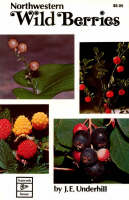
3. Northwestern Wild Berries by J.E. Undrehill


Thursday, 31 March 2011

Philosophy 101 By Socrates

I judged this one by the cover and thought it was going to be lame, but I'm really glad that I read it. It makes for an interesting commentary on the Apology and also includes the Phaedo and Crito accompanied by shorter commentaries. It's worth the read for sure.

St. Patrick of Ireland


St. Patrick of Ireland

With midterms becoming one of those monstrous realities in life my extra-curricular reading has slowed down a bit, but I'm blessed that it hasn't stopped. St. Patrick of Ireland was an excellent read and far better than I anticipated. If you like Ireland, history, mythologized saints, or all three you'll like this book.
The author, Philip Freeman, is a Harvard educated classical historian and professor at Lutheran College as well as a guest lecturer at Oxford among several other schools. He uses his knowledge of ancient history and a very limited number of sources to construct his biography and shed light on the world of Patrick (who in Roman fashion was actually named Patricius). Freeman offers lucid and lively insight on the man behind the myth and the crazy lives lived by Irish kings, slaves, and druids. The book is factual and honest but reads like fiction. I highly recommend it, impress your friends next Patty's day!

Wednesday, 30 March 2011

Ep. 3 My book philosophy

In this episode I share my philosophy on reading. What's yours? Do read more for entertainment or information? Are you more into fiction or non-fiction? Check out my video below and post your thoughts below or on my youtube page.